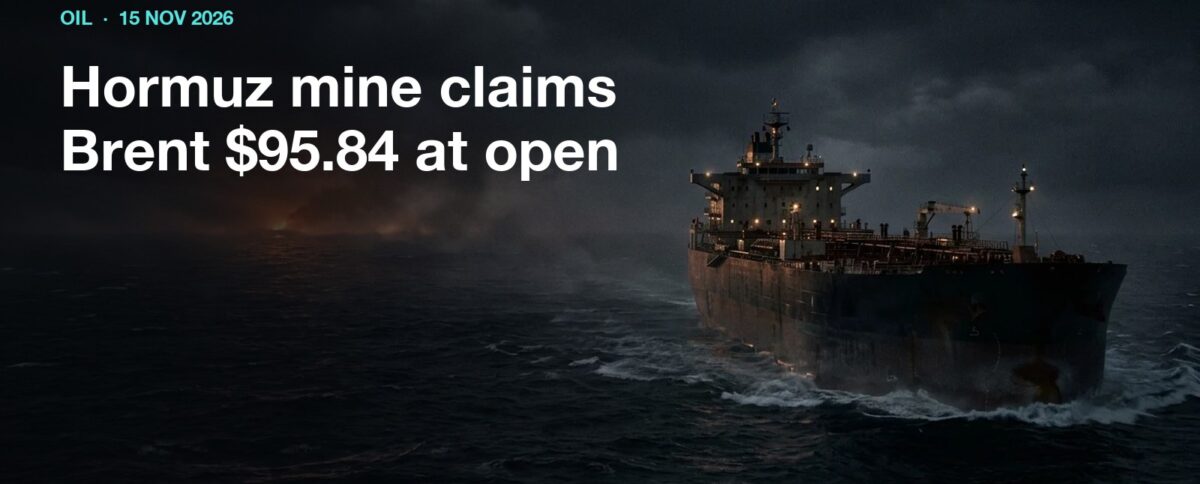
Oil price: Iran says 3 tankers hit Hormuz mines as Brent waits at $95.84 for the open
Oil heads into the Sunday evening reopen with a new risk on the table: Iran says three tankers caught fire after hitting naval mines in the Strait of Hormuz on Saturday. Brent last settled at $95.84 a barrel on Friday, after a second straight weekly fall, so the first question for traders is whether these claims undo some of that decline.
The claims have not been independently confirmed. Iran did not name the ships, and the US military says it has already cleared the main shipping routes of mines. That gap between the two accounts is what the oil market now has to price.
What did Iran say happened in the Strait of Hormuz?
According to Reuters, Iran’s navy and the Revolutionary Guards said one tanker struck a mine in the eastern part of the strait on Saturday morning and two more were hit later in the day. Iranian officials said two of the vessels had switched off their tracking systems and were using an unauthorised route. A separate statement described a third tanker crossing a prohibited zone east of the strait.
Arab News and the Manila Times carried the same three incidents. None of the reports could verify the strikes, and no shipowner had confirmed damage at the time of writing.
Why does the Strait of Hormuz matter for the oil price?
The strait is the narrow exit from the Gulf, and a large share of the world’s seaborne crude passes through it. Any sign that tankers cannot pass safely tends to add a “risk premium” to Brent and WTI, because refiners and traders start to price the chance of missing barrels rather than barrels actually lost.
This is not a new story. In late October, CNBC reported Iranian claims that four tankers had struck mines in Hormuz. The US has since imposed a naval blockade on Iranian ports and escorted tankers through the waterway. Iran has tied any reopening of the strait to an end to that blockade.
What is new is the timing. Oil has been sliding, with Brent down about 2.5% last week as we covered in our Brent and WTI weekly report. A weekend headline like this one lands when many traders have been reducing long positions, which can make the first hours of trading jumpy.
How could oil react when markets reopen?
There are two broad paths, and traders will watch for evidence that points to one or the other.
- If the incidents are confirmed by shipowners, insurers or tracking data, the market would probably add back some risk premium. Tanker insurance rates and freight costs on Gulf routes would be early signs.
- If the claims stay unverified and the US repeats that the main routes are clear, any jump at the open could fade, as it did after some of the earlier claims.
Analysts quoted in recent coverage have been sceptical. Reports have noted the claims could not be checked independently, and the US military has said it cleared the strait’s main shipping channels. That scepticism is one reason oil fell last week despite the ongoing conflict.
What else moves oil this week?
Hormuz is the headline, but it is not the only driver. The US dollar sits near a 19-month high, and a stronger dollar makes oil more expensive for buyers paying in other currencies. Markets now price a high chance of a US Federal Reserve rate hike in December, which we explain in our Fed rate hike odds explainer. Higher rates can cool demand expectations.
Weekly US inventory data and the Fed minutes are also on the calendar. Our forex calendar for this week lists the main dates.
What does this mean for petrol prices in South Africa?
South African fuel prices follow international product prices and the rand-dollar exchange rate. Mid-month data has pointed to a petrol price cut in December, as we reported in our December petrol price outlook. A sustained jump in oil after the weekend would eat into that expected cut, while a quick fade would leave it largely intact. The rand, which sits near a seven-month low, adds a second layer of risk.
What should traders watch at the open?
- The size of any gap. Compare Sunday’s first prices with Friday’s $95.84 Brent settlement.
- Confirmation. Ship names, owner statements or insurer comments would make the claims more credible.
- US response. A statement from US Central Command could calm or add to the move.
- Spreads and volatility. Weekend-gap opens often come with wider spreads, which raises trading costs and slippage risk.
Gaps are where stop-losses can fill far from their set level. If you hold oil positions over a weekend, our guide to trading gold and commodity risk covers how position size limits damage when a market jumps. More energy and macro coverage is on our Markets page.
The short version: the weekend headline adds upside risk for oil, but the claims are unverified and the market has faded similar reports before. The first few hours of trading should show which way traders lean.
Trade the markets you read about. Open a free WiseProp Trader account, with no deposit.
This article is for education and information only and is not financial advice. Figures are as reported by the sources linked above.