
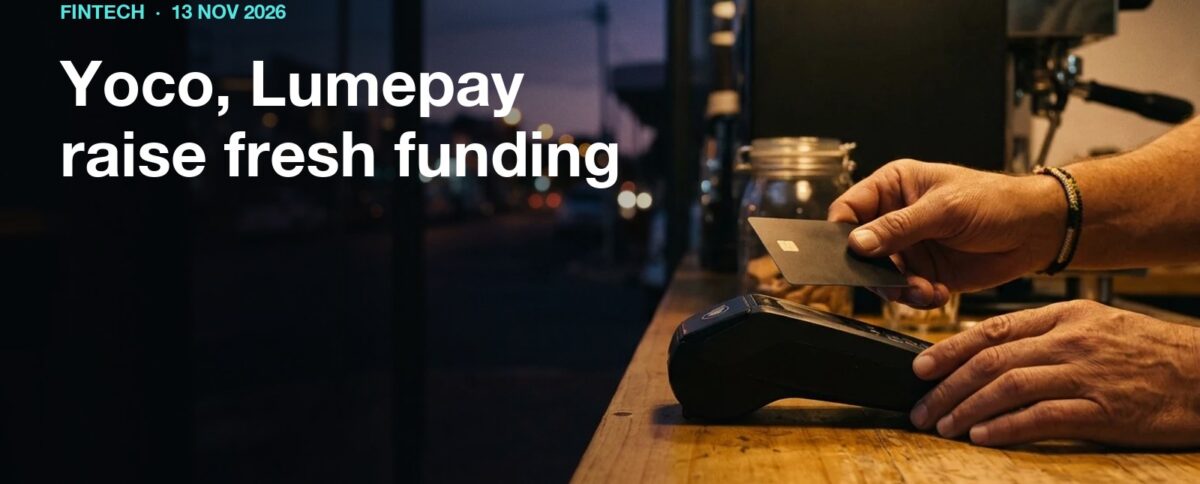
Fintech companies in South Africa: Yoco lands $100m credit line, Lumepay raises $6m
Two South African fintech companies announced fresh funding this week: Yoco secured a $100 million (about R1.6 billion) credit facility to lend to small businesses, and Cape Town’s Lumepay raised a $6 million pre-seed round for cross-border payments. Together they show investors still backing South African fintech, even as the rand slid to a seven-month low.
Yoco’s facility comes from US private credit firm Victory Park Capital Advisors and is the company’s first time raising debt, according to The Paypers. Lumepay’s round, reported by ITWeb, came with roughly $10 million in additional capital float.
What is Yoco’s $100 million deal for?
Yoco is best known for its card machines and payment tools for small merchants. It also offers merchant cash advances: short-term funding that a business repays through small deductions from future card sales. Until now, the money behind those advances came from partners. Since 2018, Yoco has helped more than 40,000 merchants access about $394 million in funding, all supplied by third parties.
The new facility lets Yoco fund advances from its own balance sheet. Advances range from about $121 to roughly $91,000 each, per The Paypers, and CEO Carsten Höltkemeyer said merchants typically use the money for staff, stock, equipment or new locations. BusinessTech described it as a R1.6 billion win for the company.
Victory Park manages about $3.6 billion in assets and has invested more than $12 billion across 260 deals since 2007. Yoco has previously raised more than $150 million in equity from backers including TPG and Dragoneer Investment Group.
Why does debt funding matter for South African fintech?
Debt is non-dilutive, meaning existing shareholders do not give up ownership. For a company with a lending book, it is also a better fit than equity: a loan facility can grow in line with the advances it funds. When a US credit fund is willing to lend $100 million against South African small-business cash flows, it is a signal that the underlying data on repayments is strong enough to underwrite.
The need is real. Small businesses in South Africa face a funding shortfall of about $21.2 billion, according to Finfind’s Access to Finance report. Payment companies sit on daily sales data that banks often lack, which lets them lend to merchants that might struggle to get a traditional loan.
What does Lumepay do, and who backed it?
Lumepay is a Cape Town-founded business-to-business platform for cross-border payments, foreign exchange and multi-currency accounts. It launched Lumetrade, a digital asset and stablecoin trading venue, in April 2026 and its cross-border payments platform in June, according to ITWeb. The $6 million (R98.6 million) round came from founder-led angels and South African fintech investors. The company has regulatory clearance in South Africa and Kenya, plus licensed partners in Francophone West and Central Africa, and Disrupt Africa also reported the round.
CEO Harry Huang summed up the pitch: “The future of cross-border payments isn’t traditional finance or stablecoins; it’s a combination of both.”
There is a regulatory caveat. A May 2026 joint statement from the Reserve Bank and the Financial Sector Conduct Authority said crypto assets, including stablecoins, used for domestic payments are not treated as payments under the National Payment System Act, Launch Base Africa noted. Lumepay’s focus is cross-border business payments rather than local retail spending, but how those rules evolve will matter.
How do these deals fit the global payments picture?
Lumepay’s mix of traditional rails and stablecoins mirrors what the largest networks are doing. This week Visa added Western Union’s USDPT stablecoin to its settlement network, which we cover in Visa’s stablecoin settlement push. Stripe, which owns the African payments firm Paystack, closed its OpenRouter deal this week; see Stripe IPO 2026: what we know.
The backdrop for local companies is not easy. The rand fell to a seven-month low near R17 per dollar on Friday, and the Reserve Bank raised rates in September. Funding that arrives in dollars is worth more in rand terms when the currency is weak, but dollar-denominated debt also has to be serviced. How Yoco manages that currency exposure is not disclosed in the reports.
What should investors and traders watch next?
- Yoco’s lending growth: whether the in-house book expands beyond the advances partners used to fund.
- Stablecoin rules in South Africa: any update from the SARB and FSCA on how stablecoins can be used.
- SARB decision on 19 November: higher rates raise the cost of credit for small businesses and lenders alike.
- More rounds: ITWeb notes that fintechs Jem and TurnStay also secured funding this year, a sign the pipeline is active.
Follow more company news in our fintech and payments hub.
Trade the markets you read about. Open a free WiseProp Trader account, with no deposit.
This article is for education and information only and is not financial advice. Figures are as reported by the sources linked above.