Fed hike odds hit 90% as Waller urges ‘aggressive action’ and the dollar index hits 103.92
Traders see a 90% chance of a quarter-point Federal Reserve rate hike in December, according to Reuters, citing CME FedWatch, after Fed Governor Christopher Waller called for “aggressive action”. Reuters reported that Waller wanted either a half-point hike or a post-meeting statement that sets expectations for further increases. The dollar index was at 103.92, a 19-month high.
Those two facts, a priced-in hike and a policymaker asking for more, are why the dollar has stayed bid even as stocks wobble.
What did Waller say about the Fed’s next move?
The Reuters summary is brief, so we are careful with it. Waller’s call for “aggressive action” comes in two forms: a bigger move, 50 basis points instead of 25, or a clear message that more hikes are coming. Either would be more hawkish than what markets currently price. We have not seen the full text of his remarks, so we are not attributing any other detail to him.
The wider context is the minutes of the last meeting, which we explained in our guide to FOMC minutes. A separate FXStreet report on Thursday cited a 93% chance of a 25-basis-point increase, which shows how close the odds sit to certainty, with small differences depending on the time and source.
How high are the odds of a December hike?
On Reuters’ reading, about nine in ten. That is a notch below the 95% that was priced when gold fell in our earlier report on gold at its lowest since September 2025, and close to the 88% we noted in our Fed hike odds explainer. Odds like these mean a standard 25-basis-point hike would not surprise anyone. The market risk is in the details: a half-point move or a harder signal on the path for 2027.
This is why Waller’s wording matters. When a hike is 90% priced, the part that can still move prices is the gap between “priced” and “what the Fed delivers or signals”.
What does a 19-month high for the dollar index mean for forex?
The dollar index measures the dollar against a basket of major currencies, and 103.92 is its highest in 19 months. The knock-on effects in the same Reuters report were:
- Euro: $1.0964, near its lowest since April 2025.
- Yen: 159.48 per dollar, close to the 160 level that has drawn intervention talk before.
- Sterling: $1.31515.
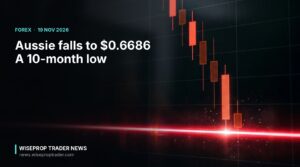
- Australian dollar: $0.6686, a 10-month low.
Our earlier dollar-index report had the gauge at 103.82, so the move since is small, but it keeps pushing to new highs for the cycle. OCBC strategists told Reuters that “More hawkish Fed pricing has so far offset weakness in technology stocks, keeping the USD supported.” In other words, even a shaky stock market has not been enough to send investors out of the dollar.
Why does a priced-in hike still move markets?
A 90% probability is not a 100% certainty, and the remaining 10% matters. If a policymaker pushes for a half-point move, the market has to decide how much weight to give that view. Currency traders often react most strongly to the wording of a central bank, not to the decision itself, because the wording shapes expectations for the meetings after. That is why a single speech or a set of minutes can shift the dollar by a full percentage point in a week, even when the headline hike was already in the price. For traders, the useful habit is to compare what is priced with what is possible, rather than reacting to the headline alone.
Why does the Fed matter to the rand and South African savers?
A higher US rate raises the cost of borrowing for emerging markets and narrows the yield advantage that attracts investors to rand assets. On the same day, the South African Reserve Bank announces its own rate decision, so the gap between the two central banks is in focus. The rand’s level is tracked daily on our dollar to rand today page.
For South African households, a weaker rand feeds into fuel and imported goods, a theme we followed when inflation rose to 5.2% in October.
What should traders watch before the December meeting?
- Other Fed speakers. Do more officials back Waller’s call for a bigger move, or is he an outlier?
- US inflation and jobs data. Softer numbers could pull the 90% down; hot ones could lift the odds of 50 basis points.
- The 160 line on USD/JPY. A strong dollar and a weak yen keep the intervention question alive.
- Treasury yields. A rising 10-year yield tends to reinforce dollar strength, as we explain in our guide to Treasury yields.
We will keep following the odds. For all our currency coverage, see the Forex hub.
Trade the markets you read about. Open a free WiseProp Trader account, with no deposit.
This article is for education and information only and is not financial advice. Figures are as reported by the sources linked above.