Oil settles up 2.3% at $91.40 Brent after Hormuz ship attacks: what it means for SA petrol
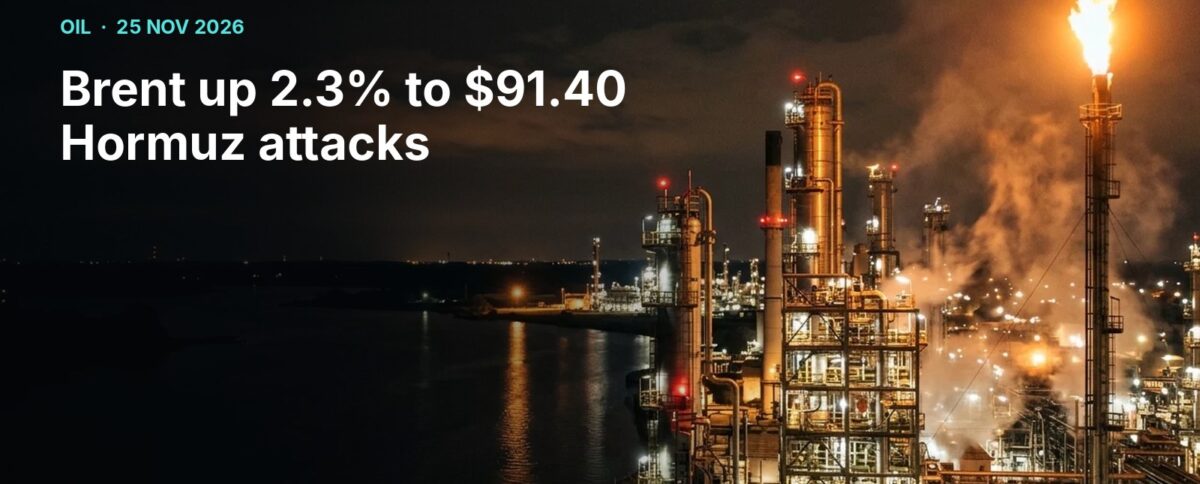
Brent crude settled $2.03, or 2.27%, higher at $91.40 a barrel on Tuesday, and US crude rose $1.88, or 2.35%, to $82.05, after reports of attacks on vessels near the Strait of Hormuz, according to a USO News report. Both contracts had earlier fallen to their lowest in months before recovering.
For South African drivers, it is a modest reversal of a good run. Oil had been sliding, which fed into the December cut to petrol that we covered in our petrol price report. The live benchmark is on our oil price today page.
What happened in the Strait of Hormuz?
The UK Maritime Trade Operations centre said three vessels were struck by unidentified projectiles on Monday while sailing east through the strait. They continued their journeys and all crew were accounted for. Iran’s Revolutionary Guards said a container ship was targeted near the strait, per the report.
Accounts of the incidents differ. Iran has separately said tankers hit naval mines, and a tanker incident was also reported earlier in November, so the exact number of ships and cause remain unclear. We cannot verify who is responsible, and traders are pricing the risk to shipping rather than any confirmed loss of supply.
Why did prices not rise more?
Because supply looks ample. The report cites Deutsche Bank saying October inventory growth implies a global oversupply of 1.7 million barrels a day. That is the restraint on prices despite the attacks, and it explains why Brent was trading near its lowest since late August before the news.
We covered that slide in our report on oil near its lowest since August. The tension is simple: geopolitical risk pushes up, surplus supply pushes down, and day-to-day moves reflect which headline arrives last.
What does this mean for the petrol price in South Africa?
South Africa’s fuel prices are set monthly from the average of international product prices and the rand over a window, not from a single day. One day of 2.3% does not change that average much. What matters is whether Brent stays near $91 or slides back toward the high $80s through the rest of the window.
The rand matters as much as oil. Fuel is bought in dollars, so a weaker rand makes the same barrel cost more. Our permanent petrol price South Africa page tracks the official changes. The December adjustment has already been reported, so any shift from this week’s moves would show up in the next cycle rather than in December.
For wider context on how rates and the dollar interact, see our Markets hub.
Consider how the monthly mechanism works. South Africa recalculates its fuel prices each month from daily international prices and the exchange rate, so a bounce in oil in late November would need to persist to alter the picture for the next adjustment. Motorists should treat any early forecast as indicative until the official figure is announced.
The same logic applies to diesel and illuminating paraffin, which follow their own international product prices. Freight and insurance costs can also rise when shipping through the Gulf is disrupted, and those costs can feed into the landed price of fuel even when crude itself barely moves.
Why does Hormuz matter so much for oil?
The strait is a narrow waterway between Iran and Oman through which a large share of the world’s seaborne oil moves, so any threat to shipping tends to lift prices quickly, even when no barrels are lost. Insurance premiums for vessels can rise, routes can change, and traders add a risk premium until the picture clears.
That risk premium fades when ships keep moving. The three vessels hit on Monday continued their journeys with all crew accounted for, which is part of why the price response on Tuesday was a recovery from lows rather than a spike to new highs.
What should traders watch?
Watch whether shipping-risk headlines continue, as sustained attacks would be a different story from a single day. Watch inventory data and OPEC-related commentary for signals on supply. And watch the dollar and yields, because oil is priced in dollars and often trades with the dollar index.
Crude is a volatile market and gaps on geopolitical news can be sharp. Anyone trading it through leveraged products should size positions with that in mind.
Trade the markets you read about. Open a free WiseProp Trader account, with no deposit.
This article is for education and information only and is not financial advice. Figures are as reported by the sources linked above.